
Written by Gemma Sheppard, BSc Psychology, MSc Human Animal Interaction and Wellbeing – feral sober woman, animal welfare advocate and founder of More Than Human.
What This Article Explores:
- Why your internal state matters more than strategy in human–animal relationships
- How nervous system regulation shapes behaviour and training outcomes
- What co-regulation looks like in real life
- Why safety must come before behaviour change
- How small internal shifts transform interactions
- Why relationship-based animal care begins with emotional safety
The Pattern Many Thoughtful Carers Fall Into
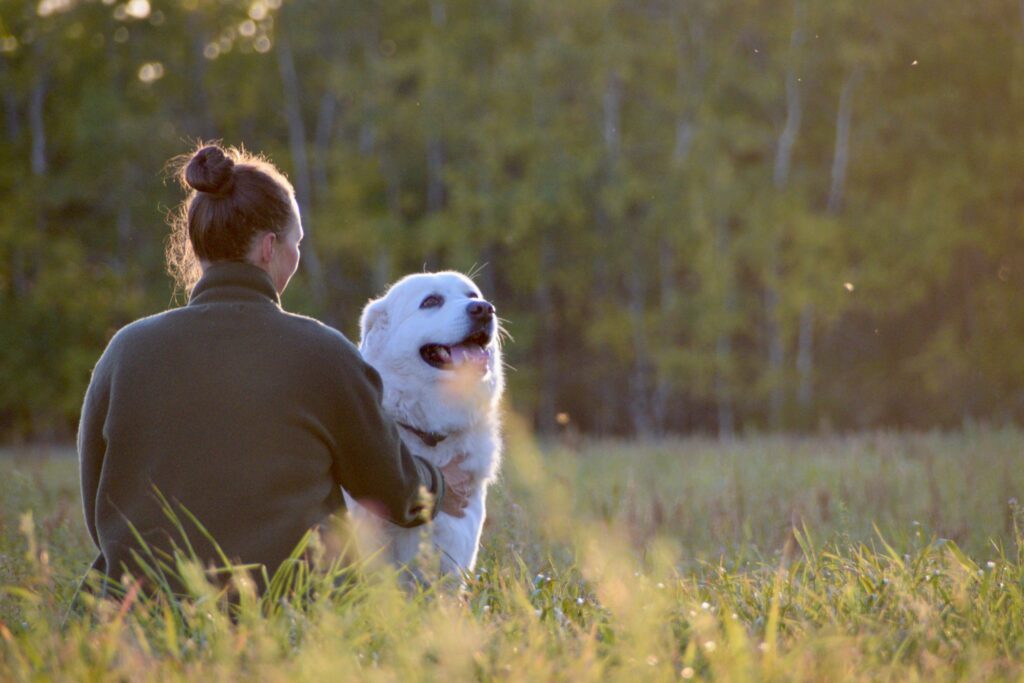
If you spend enough time around people who care deeply about their animals, you start to notice a pattern:
The most thoughtful, conscientious carers are often the ones who doubt themselves the most. They assume they need to learn more, try harder or find a better technique.
So they read the books, follow the experts, buy the equipment and keep searching for the method that will finally make everything click.
And yet, despite all that effort, things can still feel tense or difficult.
Over time, I’ve come to realise that the missing piece usually isn’t knowledge or skill:
It’s state.
I explored this idea more deeply in Your Nervous System Is Shaping Every Relationship You Have – where I unpack how state shapes every relationship long before strategy does.
Animals Respond to Your Nervous System First
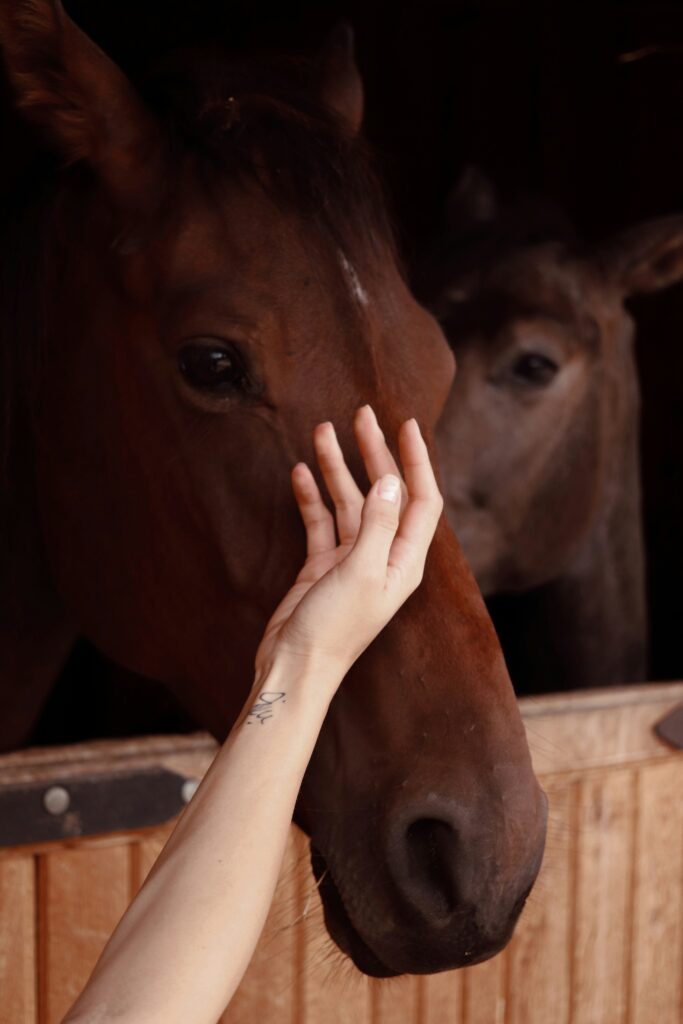
Long before animals respond to our cues or training plans, they respond to our nervous systems.
They are constantly reading:
- Our breathing
- Our muscle tone
- The speed of our movements
- The quality of our attention
They don’t care how much theory we know if our body is broadcasting stress.
What reaches them first is not our intention, but our regulation.
This was a humbling lesson for me to learn.
When Knowledge Isn’t the Problem
For years, I believed that being a good carer meant doing more. More studying, more structure, more effort, more control.
If something wasn’t working, I assumed I simply hadn’t found the right strategy yet.
I rarely stopped to ask how I was actually showing up in my body.
Looking back, many of the moments I’m least proud of didn’t happen because I lacked knowledge. They happened because I was overwhelmed, tired, or rushing.
My jaw was tight.
My breath was shallow.
My patience was thin.
Even when I spoke softly, there was an undercurrent of urgency and frustration running through me.
My animals weren’t responding to the calm voice I thought I was presenting.
They were responding to the tension I didn’t realise I was carrying.
What Changed When I Slowed Down First
When I finally began slowing myself down first – everything else began to change:
- Walks felt less like a battle of wills and more like shared time together.
- Handling became lighter and more cooperative.
- Issues I had labelled as behaviour problems often softened on their own.
Nothing dramatic shifted in my technique, but my internal state was different.
And that changed the entire interaction.
What Co-Regulation with Animals Looks Like in Practice
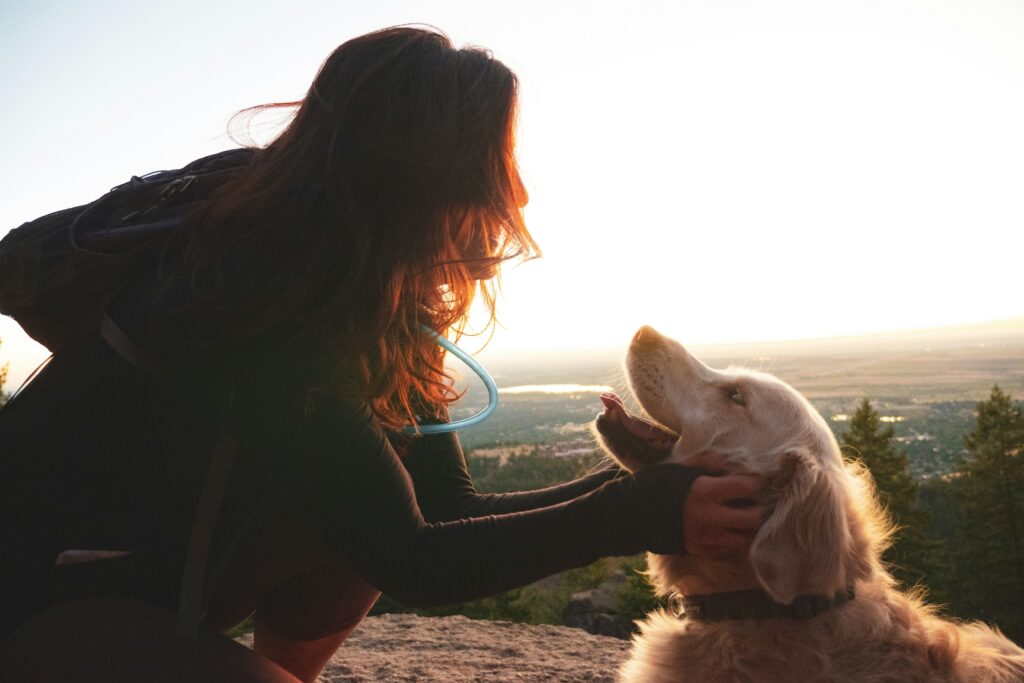
As mammals, our nervous systems constantly influence one another. Safety is contagious, but so is stress.
When you feel grounded and present, the animals around you tend to settle. When you feel anxious or reactive, they often mirror that too.
There is a quiet, biological conversation happening underneath every lead, rein or training cue.
You’ve probably seen this without naming it.
- Your dog finally relaxes when you sit down and exhale.
- Your horse, who softens the moment you stop trying to force an outcome.
- Your pet who seems difficult on a day when you’re exhausted, but cooperative when you feel calm and spacious.
In those moments, nothing technical changed.
What changed was the level of safety in the system.
Without that sense of safety, even the best methods struggle to work.
Why Even the Best Methods Struggle Without Safety
When we’re dysregulated:
- We lose access to our best judgement.
- We become more reactive and less observant.
- We miss subtle signals and early signs of stress in animals.
- We jump straight into fixing or correcting.
- Small challenges feel bigger and more personal than they really are
And this makes it easy to assume either we’re failing or our animal is being stubborn.
From that state, we often reach for more control – when what’s actually needed is more steadiness.
Regulation Is the Foundation
In my experience, regulation isn’t a nice extra or a self-care luxury.
It’s the foundation that everything else rests on.
Before training.
Before problem-solving.
Before trying to change behaviour.
There has to be a baseline sense of safety for both of you.
This doesn’t mean you have to be perfectly calm all the time.
That isn’t realistic, and animals don’t need perfection from us. What matters more is awareness.
Ways to regulate your nervous system in real-time:
Notice when you’re rushed or tense.
Give yourself a moment to reset before you engage.
Slow your breathing.
Soften your posture.
Pause long enough to arrive in your body.
These small adjustments often look insignificant from the outside, yet they can completely change the tone of what follows.
They can transform the quality of your relationship.
When you feel more regulated, you naturally become:
- More patient.
- More attuned.
- More able to respond rather than react.
Your animal feels that difference immediately.
And many so-called problems dissolve without you having to do very much at all.
Learning This in Practice
Inside Animals Make Us Human, this is something I encourage people to practise, rather than just understand intellectually.
If you’d like space to explore this alongside others who care deeply about their animals, you’re welcome there.
Because reading about regulation is one thing, experiencing what it feels like to come back into your body and create safety in real time, is another.
From that place, better decisions tend to follow naturally.
The Most Powerful Tool You Already Have
Animals don’t need perfect carers or flawless techniques.
They need humans who feel steady enough to listen, observe and respond with care.
More often than not, the most effective tool you have isn’t something you buy or learn:
It’s your own nervous system and your ability to meet them from a place of calm presence.
FAQs
How can I reduce stress in my pet naturally?
Start with your own state and learn how to manage your own stress better. When you slow down, soften your voice, and breathe more steadily, you create safety. Regulation often begins there, not with tools, but with presence.
What are the common signs of stress in animals?
Stress usually appears quietly before it escalates. Tension around the eyes or jaw, shallow breathing, restlessness, heightened vigilance. Noticing these early allows you to respond before your animal feels they need to react. Remember: it is always ok to finish training/walks early if your animal is becoming overwhelmed.
How can I improve the bond with my pet?
Strong bonds are built on safety, not performance. Spend time together without asking for anything, just noticing how your animal responds to your presence. When you slow your breathing, do they relax their body? When you sigh, do they sigh too? When your animal feels safe with you, trust grows naturally.
How do I calm a reactive dog or animal?
Reactivity is often an overwhelmed nervous system combined with anticipatory stress (from you and them). Before adjusting the lead or correcting behaviour, check your own body. This is especially important before working with your animal. Can you leave the stress of the day behind and be present in this current moment? Calm your own system before taking your dog for a walk or entering your horse’s field. If it feels overwhelming, stop. Come back when your system is less vigilant.
Can reactive dogs get better?
Absolutely yes, when the focus shifts from fixing behaviour to supporting regulation. With safety and consistency, many reactive animals learn that they are no longer alone in their stress. I have seen so many reactive dogs completely change their behaviour when they are being handled by someone who has no prior experience of their reactivity. Learning to regulate yourself so you can be in the present moment with your animal, rather than remembering the time they were rushed by an off lead dog or didn’t come back when you called them, helps them to feel safe. If you’re recalling with panic in your voice, they won’t want to come back to you.